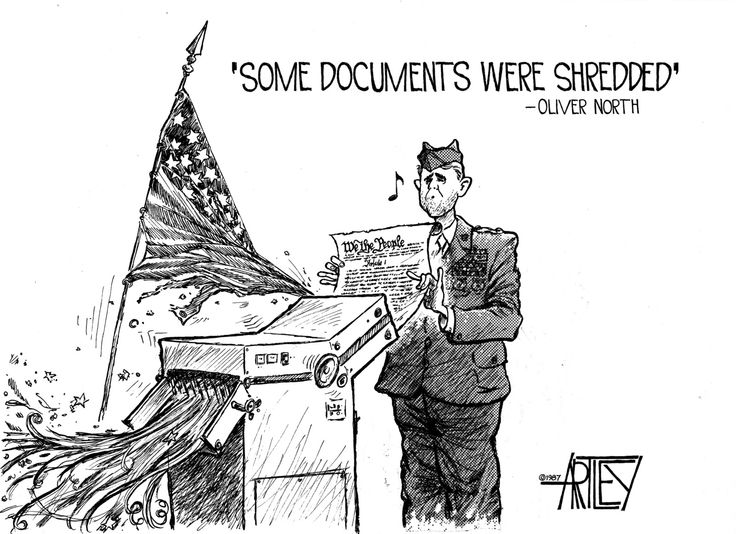
Four hostile newspapers
are more to be feared
than a thousand bayonets.
Napoleon Bonaparte
There’s an old expression that says the pen is mightier than the
sword. It’s a quote from a play written by Edward Bulwer-Lytton in
1839. I’ve always considered this to mean the written word is mightier than the sword, but
I’ve come to learn that perhaps the political cartoon plays an even
mightier role.
Back in the mid-1800s, the dark masses, as they were called, could not read. But they could get political information from cartoons--not something those in power liked. So when illustrated chronicles blasted upon the scene, they caused an immediate stir. Now, in journal form, people could see for themselves the unscrupulous side of government and business alike.
Most of theses journals pushed the envelope, causing many to be jailed, fined or censored. In fact, they continued to do so all the way up to and including Charlie Hebdo. Eventually their office would be attacked by two gunmen who killed 12 people and seriously wounding three. I’m not here to discuss the moral or ethical question of how far political cartooning can go, but it does bring up the point that images can speak louder than words.
The
political cartoon truly hit its stride in the 1830s with the advent of the
illustrated magazine. One of the first publications was the Parisian La
Caricature, along with the daily Le
Charivari (1830-1937) Two other famous magazines sprung to life later, Punch, London England (1841 to 2002) and in
the States, Puck (1871 to 1918).
La
Caricature and the daily
Le Charivari
Just after the revolution of July 1830 in France, caricaturist Charles
Philipon and his brother-in-law Gabriel
Aubert started La Caricature which
came out monthly and later, Le Charivari,
which was published daily.
The French have a long history of satire and
cartooning. Even before their first revolution, there were drawings passed
around degrading the monarchy and clergy—some of the graphics were at times
almost leaning toward pornography. Then with the help of the printing press and lithography, copies could be
made to create illustrated newspapers, which became vehicles to spread their
agenda.
Philipon’s journals were not particularly lengthy but from the start were generally political. By 1831, Philipon found
himself in court for libel because of, among other things, drawing the Citizen King
Louis-Phillip's head in the form of a pear.
Poire (pear) means not only the fruit in French but also slang for being
dim-witted. By drawing the king’s head in the form of a pear, he was doing more
than placing big ears, as political cartoonists have done with Obama.
In his court case, though, Philipon demonstrated
that any face can be turned into any shape, including a pear. He demonstrated
this belief with the following drawing:
Philipon said in his defense, “Is it my fault, gentlemen of the jury, if his
Majesty's face looks like a pear?” Unfortunately, it just didn’t fly. He was
jailed and fined 2,000 francs—lots in those days—and closed down in 1835, after
being seized 12 times.
 One of the most famous illustrations is the Past, Present and Future by Honoré Daumier, published in
1834. The three faces represent:
One of the most famous illustrations is the Past, Present and Future by Honoré Daumier, published in
1834. The three faces represent:
Things that were promised in the past: the aristocracy
would get less while the bourgeoisie (middle class) and lower class (poor)
would get more.
Things that were happening in the present: None of the above
Things the king would have to face: A foreshadowing of
the Revolution of 1848, when he was disposed, followed by Napoleon creating the
second republic (which lasted until 1870).
 As Philipon stated to a friend regarding the citizen king’s
administration, "The golden age [of consensus]
did not last long. You'll see, after a dozen of issues La Caricature's drawing political cartoons, soft first and but
slightly aggressive, came back more often, more often again, and more intense,
until it occupied all of the newspaper and becomes ruthless." Things
continued to go from bad to worse.
As Philipon stated to a friend regarding the citizen king’s
administration, "The golden age [of consensus]
did not last long. You'll see, after a dozen of issues La Caricature's drawing political cartoons, soft first and but
slightly aggressive, came back more often, more often again, and more intense,
until it occupied all of the newspaper and becomes ruthless." Things
continued to go from bad to worse.
About two years after the publishing of La Caricature, which
had several pages and printed on expensive paper, Philipon opened Le Charivari, ("noisy group" in French) in
order to avoid censorship and fines. It was originally printed in four pages
and continued until 1937. Much softer on the political cartoons, especially
after 1835, this publication was dedicated more to the satire of everyday life.
Of course, in the years that followed, the journal could not
ignore world events, brewing in their own backyard. Le Charivari included both
light satire to expressive cartooning as times warranted.
 |
| Preoccupied man |
Punch
Across the channel another
journal was being created, modeled after Le
Charivari, this one entitled, Punch. Obviously the French
journal was making such an impact on the Continent, that the English even
stated that their journal was the London Charivari.
However, Punch was a bit different. Begun by Ebenezer
Landells and Henry Mayhew as a humorous and
satirical magazine in 1841, the paper developed a reputation for its wit and
impertinence lasting until 2002. According to the Punch Magazine website,
the word “cartoon” originated with them. As with Le Carivari, George du Maurier (1834 –
1896) was one of the publication’s favorite artists. Fortunately,
we have a lot more examples of how Punch influenced and/or
informed the public than the French counterpart from its early days all the way
up to our recent past.
From
its inception its purpose was to expose the evil doers and champion the down
trodden. The publication was well named as it never held-back a punch and
unlike Le Charivari, it was never closed down by the government.
 |
| Cheap Clothing, (Leech, Punch 1845) |
I would like to show you more of Punch’s illustrations, but
they have copyrighted most of them, so if you want to see more you'll have to go to their website
Puck.
In 1871 another illustrated magazine
gave birth but now across the pond in the United States, called Puck. Austrian-born, Joseph
Keppler began his paper in St. Louis in both English and German. Six years
later both editions were published in NYC, with the one in English continuing
until 1917. Briefly there was also a London version. Eventually, a typical issue was 32 pages using color and paid advertisements, becoming one of the most successful magazines of its kind.
However, while reading about this
publication on a U.S. Senate site regarding its
history, I found this little tidbit:
Puck
attracted an appreciative audience. Its pro-Cleveland cartoons in 1884 may well
have contributed to the Democratic candidate’s narrow victory in the
presidential election. The Republicans responded by buying Puck’s weak rival,
Judge, and luring away some of Puck’s talented staff. Within a few years, Judge
supplanted Puck as the leading humor magazine.
Hmmm. Very interesting.
Whatever the case, I truly like scrolling through our history in cartoon form. Besides their artwork is far superior, in my opinion, to the others previously mentioned.
It’s not hard to find artwork from Puck (Judge and Harper’s Weekly) on
the Internet and best of all, you learn so much more about American history than if
you were to read thousands of pages. There you go, as I said, the political
cartoon can speak volumes.
Although Teddy Roosevelt was much beloved, he was much detested, as evidenced in Puck. I’ve included several of his cartoons along with others that show our late 18th century and 19th century story. I hope you enjoy them.
 |
The Political Janus 1910
It all depends on the way you look at him. |
 |
| 1902 Finds the helm in safe hands. |
 |
No Limit 1909
Japan I see your cruisers and raise you a dreadnought! |
 |
| The protectors of our industries 1883 |
 |
School Begins (1899)
Now, children, you've got to learn these lessons whether you want to or not!
But just take a look at the class ahead of you, and
remember that, in a little while,
you will feel as glad to be here as they are! |
Next month, I'll be covering editorial cartoons from the mid-1950's to present. It should be interesting.
*******************************
Finally,
I've put together the Glastonbury Studios workshop catalog for 2017. As you may
remember the workshops are being taught in my studio in Tigard, are only $85
for the day, include lunch and most supplies.
Take a few minutes and review the offerings. When you
find something that you like, email
me for the registration pack.
Hope you in you like what you see.
++++++++++++++++
What's coming up!
Glastonbury Studios Weekly Classes
Winter Term II begins week of February, 28th
Please note: Limited space per class. Payment reserves your seat.
Pencil to Brush
Creating a drawing and finishing it with acrylic paints.
Every Tuesday morning
10 am to 12:30 pm
$75 per five-week term
Beginning to Intermediate
Open (seats available)
Pencil to Brush
Creating a drawing and finishing it with acrylic paints
Every Thursday evening
6:30 pm to 9:00 pm
$75 per five-week term
Open (seats available)
++++++++++++++++++++++++++++++++
Glastonbury Studios Workshop
Saturday, March 4 10 a.m. to 4 p.m.
Perspective the Easy Way
Learning perspective isn’t as difficult as it seems. It’s rather logical and when you get it, the whole process becomes easier. You’ll learn one- and two-point perspective, building roads, villages, room interiors, arches and more. Bring a Strathmore Visual Journal/Mixed Media with you to class and I’ll supply the rest, including lunch. To register, please email at jjgoodell@gmail.com
Now accepting reservations!
Sketching a Bit of England
Marlborough, England
September 3-10, 2017
 |
Marlborough
River Kennet | High Street |
Sketch'n on the Go ™Tours
There is a $50 deposit to reserve your place.


 \
\